Blog
Dental hygiene tips for healthy teeth & gums
10 Benefits of Dental Sealants for Kids
My friend’s son was eight when his dentist found three cavities in his back molars. The dentist brought up sealants. She’d never heard of them. I’ve spoken to enough parents to know that’s a pretty common way to find out dental sealants for kids exist. Sitting in a pediatric dental office, after the damage is already done.
Dental sealants for kids are thin protective coatings applied to the chewing surfaces of back teeth, where most childhood cavities form. They’re quick, painless, and can last years. The research behind them is strong, and the cost is a fraction of what a single filling costs.
How Do Dental Sealants Work
Back molars aren’t smooth. The grooves and pits in them collect food and bacteria that a toothbrush can’t get to. That’s where most childhood cavities start.
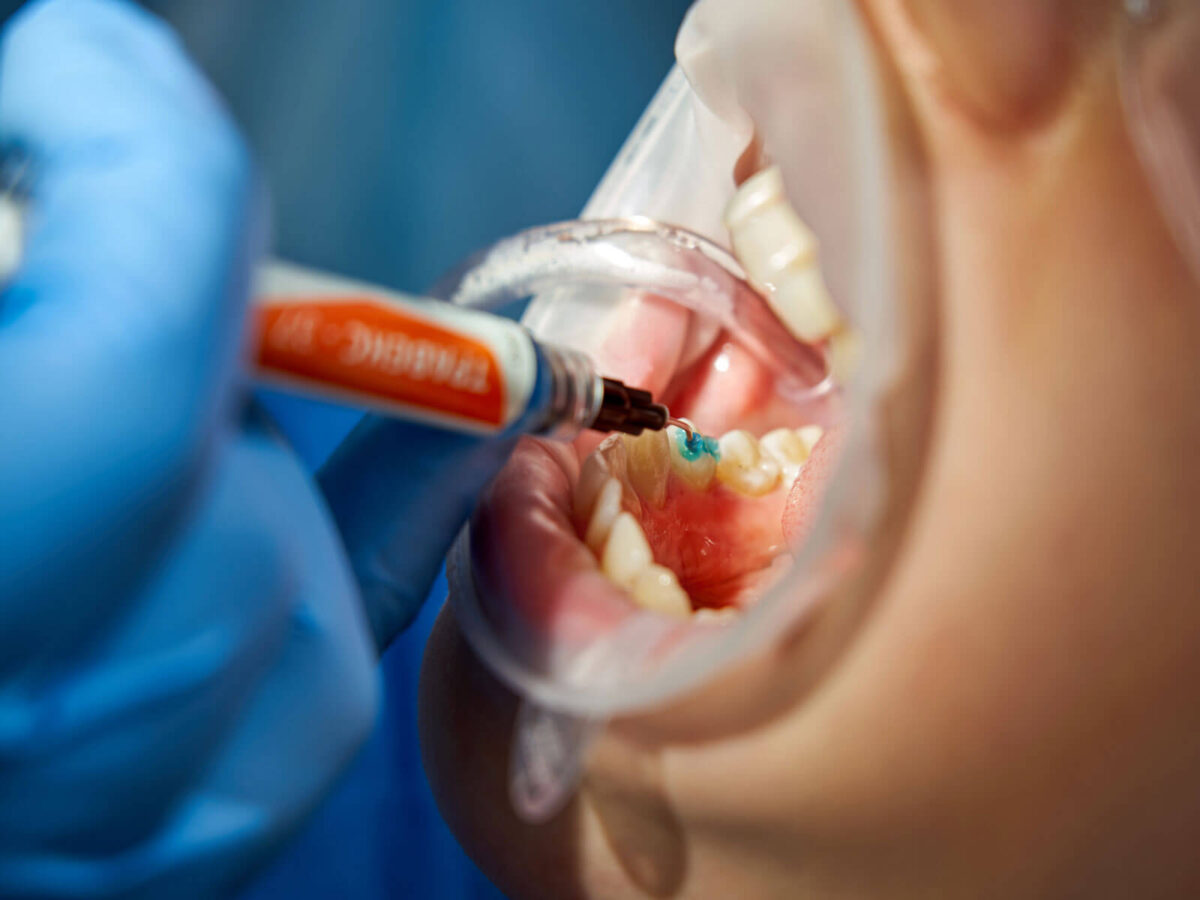
Sealants go directly onto those surfaces. The tooth gets prepped, the coating goes on, and a light hardens it. A few minutes per tooth, no drilling, no needles.
The CDC recommends dental sealants for kids as part of children’s preventive oral care.
Benefit 1: Sealants Protect the Teeth Where Cavities Actually Start
Back molars take the most damage. The grooves in them collect what brushing leaves behind, and that’s where decay gets in. Cavity risk in back teeth drops by 80 percent over two years with sealants, according to the CDC.
The molars are the problem area for a reason. Their deep grooves are nearly impossible to clean completely, even with consistent brushing. A sealant eliminates the groove. The surface becomes flat and smooth, and what the brush can’t reach becomes less relevant.
Benefit 2: Children Without Sealants Have Three Times More Cavities
CDC data shows that school-age children between six and eleven without dental sealants for kids have almost three times as many cavities in their first molars compared to children who have them. That’s a wide gap.
I’ve spoken to parents who assumed good brushing habits would be enough. For most kids, thorough brushing handles the accessible surfaces fine. The grooves on molars are a different problem that brushing alone was never designed to solve.
Benefit 3: The Protection Lasts for Years
Sealants aren’t a one-visit fix that wears off in a few months. The CDC reports that dental sealants for kids prevent about 81 percent of decay at two years after placement, dropping to 50 percent at four years, with protection continuing for up to nine years. I’ve seen parents surprised that a single appointment at age six or seven can cover most of the years when cavities are most likely.
They do need to be checked at regular dental visits. Chipping or wear can reduce effectiveness over time, and a dentist will spot that and reapply where needed. Most actually last several years without any attention beyond a routine exam.
Benefit 4: They Work Even on Early Decay
Sealants aren’t only useful on perfectly healthy teeth. Research published in JADA found that dental sealants for kids can be safely placed over early-stage decay, sealing bacteria off from the nutrients they need and stopping progression. The assessment supports sealant placement as a reversible procedure that doesn’t prevent further treatment if needed later.
I’ve spoken to parents who assumed it was already too late once early demineralization showed up on a molar. Ask the dentist directly. A lot of parents assume sealants aren’t on the table when they actually are.
Benefit 5: No Needles. No Drilling. No Pain
For kids who already have anxiety around dental visits, this matters. No drilling, no injections, no sounds associated with discomfort. The whole thing is painted on, cured with a light, and finished. Most children barely register it as a dental procedure.
Someone I know took her daughter, who had been scared of dentists since a difficult filling at age five, in for dental sealants for kids. She described it as the first dental visit her daughter hadn’t cried through. For anxious kids, that kind of appointment can shift something.
Benefit 6: They Cost Less Than a Filling
The cost comparison isn’t close. The Pew Charitable Trusts estimated that dental sealants for kids cost about one-third the price of a filling. And a filling is the best-case scenario once decay is present. If decay gets to the nerve, you’re looking at a root canal and a crown.
Most plans cover it. Sealants fall under preventive care, so for families with coverage, the cost is often nothing.
Benefit 7: They Cover Teeth During the Years Decay Hits Hardest
The first permanent molars come in around age six. The second set follows around twelve. Both show up before most kids can reliably brush them, and that’s the stretch when decay tends to take hold.
Sealing those molars shortly after they come in closes that window. I’ve seen parents who didn’t know this was an option until a cavity had already formed on a tooth that had only been in for a year.
Benefit 8: They Reduce the Need for More Invasive Treatment Later
Every filling placed in a tooth removes some of the natural structure. Each subsequent filling removes a bit more. A tooth that keeps getting refilled loses more structure each time. At some point, a crown becomes the only way forward. Preventing the first cavity with dental sealants for kids can interrupt that entire cycle.
The CDC’s MMWR report on sealant use found that pain and learning disruption tied to untreated decay could largely be prevented with timely sealant application. I’ve seen parents realize months later that a toothache was behind their kid’s trouble focusing at school.
Benefit 9: They Are Safe and Thoroughly Researched
The BPA question comes up a lot. Some formulations do contain trace amounts of it, and parents notice that when they start researching. The ADA has confirmed the exposure level is lower than what a person gets from breathing air, handling a receipt, or using cosmetics. Sealants have been in use for over forty years. The ADA and CDC both back them, and the research base is substantial.
I’ve spoken to parents who held off because of something they read online about BPA. By the time they came back around to it, there was already a cavity to deal with.
Benefit 10: They Help Establish a Positive Dental Foundation Early
A child who gets through their early years without cavities doesn’t build that association between the dentist and bad news. It sounds small. It isn’t. Dental anxiety in adults gets traced back to childhood experiences more often than people expect.
I’ve spoken to adults who remember the exact appointment that turned them off dentists for years. They don’t guarantee a perfect record. But they take a lot of the situations that make appointments go badly off the table.
FAQ
When do kids actually need dental sealants?
First molars come in around six. Second molars follow around twelve. High-risk kids sometimes get them on baby teeth before that.
Can sealants replace daily oral cleaning?
No. They only cover the biting surfaces. Flossing still has to do the work between teeth.
Are dental sealants safe?
Yes. The ADA and CDC both support them. Parents ask about BPA fairly often. The exposure from sealants is minimal, well below everyday environmental levels.
Does my child’s insurance cover sealants?
Most plans do, usually up to sixteen or eighteen. Age limits vary, so a quick call to the insurer before booking saves the guesswork.
Conclusion
The benefits of dental sealants for kids go further than most parents expect. It’s not just about blocking cavities. Kids get through checkups without bad news, and the teeth most likely to develop problems get protected before they do.
Dental sealants for kids are one of the more cost-effective things that can happen at a routine checkup. I’ve seen parents surprised by how quick the application is and how long the protection holds. If first or second molars have recently come in, it’s worth bringing up at the next visit.