Blog
Dental hygiene tips for healthy teeth & gums
7 Signs Your Wisdom Teeth Are Coming In
Wisdom teeth rarely arrive with much drama. Most people do not notice them at first. The teeth develop quietly in the back of the jaw, often long before they are visible. Some people learn about them during a regular dental appointment. A dentist reviews the X-ray.
Then they mention that wisdom teeth are beginning to develop. For some people, that is the first moment they realize those extra molars exist. Others notice something different. A slight pressure appears behind the last molars. It does not feel painful at first, just unfamiliar.
Understanding when do wisdom teeth come in helps explain these changes. Dentists usually see them develop during the late teenage years. Sometimes in early adulthood. By then, most permanent teeth have already settled into place.
The National Institute of Dental and Craniofacial Research has reported similar timing. For many people, wisdom teeth appear sometime between the ages of 17 and 25.
Even though the timing is similar for many people, the experience itself can vary quite a bit.
Why Pressure in the Back of the Mouth Is Often the First Sign
One of the first sensations people notice is pressure near the back molars. At the beginning, it can feel very mild. Some people notice it only while chewing or opening the mouth widely.
This pressure happens as the tooth slowly moves upward through bone and gum tissue. The process takes time. Most people may not notice it. Not unless they are paying close attention.
Dentists usually talk about this feeling when patients ask about the signs of wisdom teeth coming in. The sensation often appears in short phases. Pressure may last a few days, then fade.
This pattern can repeat over time. The tooth continues moving slowly until it finally approaches the gum surface.
Why Gum Tenderness May Appear
When wisdom teeth begin pushing toward the surface, the gums nearby may react. The area behind the last molar can feel tender while brushing. Chewing sometimes makes the sensitivity easier to notice.
Usually, the change is mild. Some patients notice a little swelling. Others simply feel that the gum reacts more easily than before.
These changes may appear before the tooth can be seen. Dentists frequently hear patients describe tender gums. This can be one of the first signs of wisdom teeth coming in.
A routine dental visit often reveals the cause. X-rays give dentists a clearer view. They show whether a wisdom tooth is beginning to erupt.
How Jaw Stiffness Can Develop
Jaw stiffness is another change people sometimes notice. It does not affect everyone, but dentists hear about it often enough.
The reason usually involves pressure on surrounding tissues. As the tooth pushes upward, nearby muscles may react.
The stiffness is usually not severe. It may simply feel like tightness when opening the mouth fully. Tough foods can make the stiffness easier to notice.
In many cases the discomfort slowly fades. As the wisdom tooth moves further into place, pressure on the surrounding tissues often decreases. Dentists sometimes note that mild stiffness can be one of the signs of wisdom teeth coming in.
Why Headaches May Occasionally Occur
Headaches can occasionally appear during wisdom tooth development. Many people do not expect this symptom. At first the connection may not seem clear. Jaw pressure from growing wisdom teeth can affect nearby structures. Nearby muscles respond to that pressure. Some of these muscles reach toward the temples and sides of the head.
When tension builds there, mild headaches may develop. They usually last for a short time. Patients often describe them as brief or occasional rather than severe.
Dentists sometimes hear about these headaches when people ask when wisdom teeth come in and what the process might feel like. As the tooth erupts further and pressure decreases, the headaches usually fade.
Why a Small White Edge May Appear Behind the Molars
The tooth eventually breaks through the gum surface. At that stage a small white corner may appear behind the back molar.
In the beginning it may appear as a raised ridge. Just a small portion of the crown can be seen. Over time, the tooth slowly emerges. The shape becomes clearer as more of the surface appears.
For many patients, this moment confirms the first signs of wisdom teeth coming in. Dentists can usually identify this stage quickly during an examination.
How Food Getting Stuck Can Be a Sign
Another change people sometimes notice is food collecting in the back of the mouth. This tends to happen once the wisdom tooth begins emerging.
Small spaces can form around the tooth while it is still partially covered by gum tissue. Food particles may settle there more easily than before.
Patients often notice that brushing the back of the mouth suddenly requires more care. The area may feel harder to clean.
Dentists frequently see this pattern during the early stages of eruption. Trapped food and irritation are common signs of wisdom teeth coming in.
Why Swelling May Develop Around the Tooth
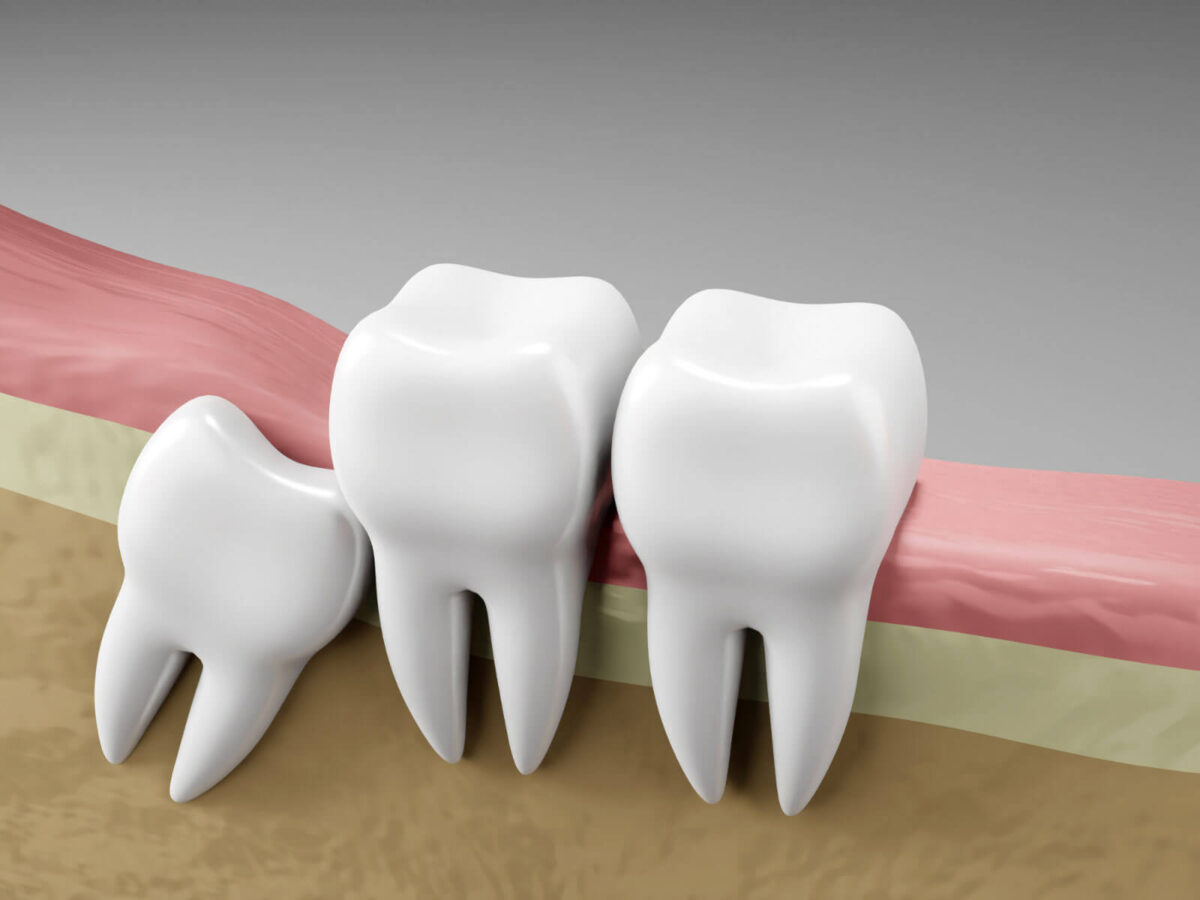
Sometimes a wisdom tooth does not come through the gums all at once. A small part of the tooth may remain covered by gum tissue. Dentists often see this during the early stages of eruption.
That small flap of gum can trap food and bacteria. Cleaning the area becomes difficult. After some time the gum may appear swollen or irritated. Tenderness near the back of the mouth is also common.
Dentists call this condition pericoronitis. It occurs when the tissue around a partly erupted wisdom tooth becomes inflamed. The National Library of Medicine describes it as a common issue linked with erupting wisdom teeth.
Watching for swelling can help people recognise the signs of wisdom teeth coming in. It may also help them know when a dental visit would be helpful.
Why Some People Notice Almost Nothing
Interestingly, wisdom tooth development does not always cause clear symptoms. Some people never feel pressure or irritation while the teeth are forming. The teeth may grow quietly in the background without creating noticeable changes in the mouth.
In situations like this, wisdom teeth are often discovered during routine dental X-rays. Dentists can usually see these teeth developing long before patients feel anything unusual. This is one reason regular dental visits remain important. X-rays allow dentists to watch how the teeth are forming and notice possible concerns early.
Sometimes there are no symptoms at all. Dental imaging can still provide helpful information. It helps dentists understand when do wisdom teeth come in and whether the jaw has enough space for the teeth to grow normally.
FAQs
When do wisdom teeth usually appear?
Usually in the late teens. Sometimes a little later.
What are the first signs of wisdom teeth coming in?
A dull pressure near the back teeth. Tender gums can appear too.
Are signs of wisdom teeth coming in always painful?
No. Some people barely feel anything.
Should wisdom teeth always be removed?
Not always. Dentists decide after checking the teeth.
Conclusion
Wisdom teeth tend to appear slowly. The first changes are often small. Some people feel pressure near the back of the jaw. Others notice tender gums or slight swelling in that area.
These early changes often make more sense once people notice the signs of wisdom teeth coming in. The symptoms are not always serious. In many cases, they simply show that the teeth are beginning to emerge.
Understanding when do wisdom teeth come in helps explain why dentists watch these teeth during routine visits. If swelling or irritation continues, a dental exam can show whether the teeth are growing normally.